







Argentina Records 63,000 Public Sector Layoff in 2-Year Period

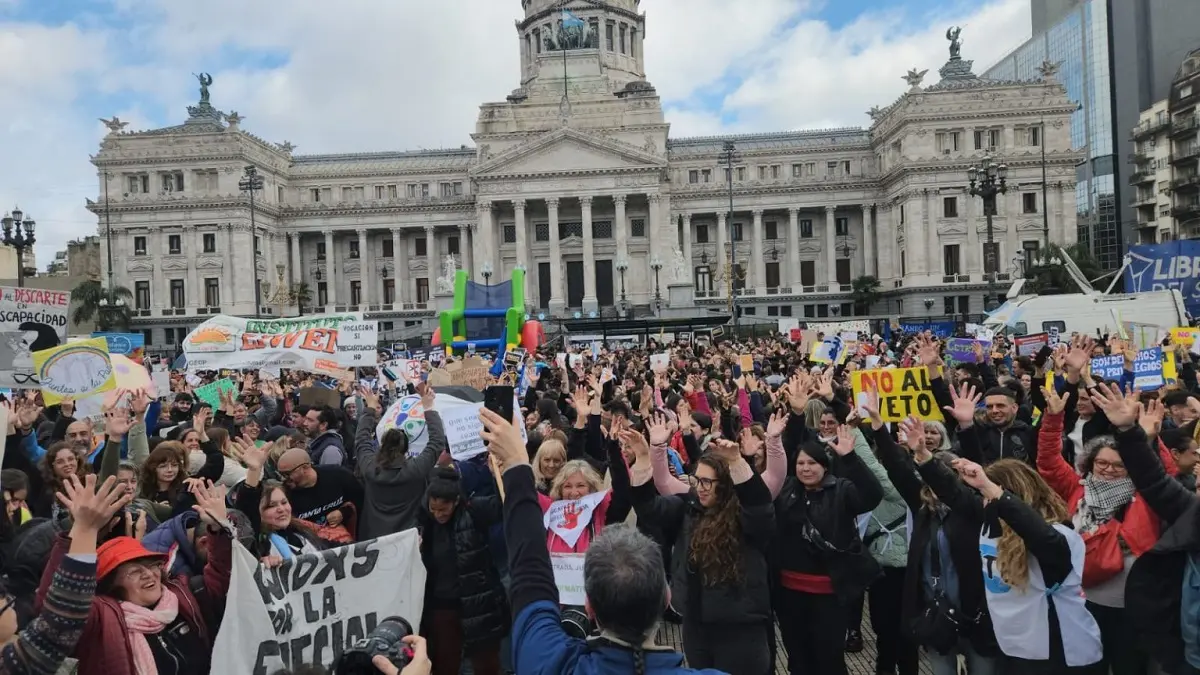
The adjustment is taking place against a backdrop of social unrest, union protests, and demands from state workers. Photo: EFE.
February 3, 2026 Hour: 2:02 am
🔗 Comparte este artículo
Argentinean Milei’s Government cut 63,000 public jobs in 2 years, crippling essential state services and social policies, into a neoliberal model of “minimum State”.
Argentina’s neoliberal adjustment program eliminated 63,234 public sector jobs between December 2023 and December 2025, according to the Center for Political Economy of Argentina (CEPA), triggering widespread social conflict and union protests.
RELATED: Argentina Declares Fire Emergency in 4 Southern Province
Hernan Letcher, the Director of CEPA, confirmed to an international news agency that the current Government of Javier Milei executed one of the deepest state labor cuts in recent decades. “Since Milei took office, we are talking about more than 60,000 public sector jobs lost”, the economist stated.
The report indicates a significant 18.4% contraction in national public employment over just 24 months – which equates to almost 80 layoffs per day-, resulting from mass layoffs, non-renewal of contracts, and administrative restructurings across various state branches.
Text reads: “Since Milei took office, a total of 270,852 registered salaried jobs have been lost:
176,908 in the private sector (-2.38%)
63,132 in the public sector (-1.8%)
30,812 in private households (-6.6%).”
“The seasonally adjusted median wage (the line that divides the number of workers in half) registered a real improvement of 0.3% in October compared to September. With this increase, it is marginally above November 2023 (+0.1 p.p.). Until October 2025, it falls by 2.4%.“
Massive Job Losses
The adjustment specifically targeted three key state areas. Decentralized agencies, public entities with technical, administrative, and financial autonomy, registered 20,537 layoffs, representing a 15% reduction in their total workforce. This sector includes institutions linked to strategic services, economic regulation, and social policies.
The National Executive Power experienced an even more severe cut, eliminating 16,918 positions, a 30.2% reduction. Central Government dependencies distributed throughout the national territory also faced these policies, losing 3,199 jobs, a 12.8% contraction.
Argentina’s State structure shed nearly 22,000 public employees during President Javier Milei’s second year in office, marking a 7.2% year-on-year reduction aligned with the far-right administration’s strict adjustment plan.
On a monthly basis, the adjustment continued through the second half of 2025. Between July and December of that year alone, the total public sector workforce shrank from 287,650 to 280,120 people, signifying a drop of 7,530 positions in six months.
By December 2025, the Argentinean Government’s workforce stood at 280,120, a decrease of 21,742 from December 2024, according to official data released on January, 30 by the Institute of Statistics and Censuses (INDEC, in Spanish), draw on data from both INDEC and the Ministry of Deregulation and State Transformation -an agency established by President Milei to implement state cuts.
Cuts in State-Owned Enterprises
In addition to cuts in national public administration, the INDEC report shows a significant reduction in the workforce of state-owned companies and corporations.
In December 2024, these entities collectively employed 96,354 people, a number that decreased to 89,184 workers by December 2025. This represents a loss of 7,170 jobs in one year, an interannual variation of -7.4%.
This category includes companies in strategic sectors such as transportation, energy, public services, media, and public banking. While the report does not detail the specific causes for each reduction, it clarifies that in some instances, the decrease is linked to processes of closure, dissolution, or liquidation of certain companies, resulting in total staff reductions.
State Capacity Weakened
These layoffs align with the Executive’s economic program, which prioritizes reducing public spending, shrinking the state, and liberalizing the economy -demands consistent with commitments made to international financial organizations.
Specialists warn that this policy directly impacts the operational capacity of the State, affects the provision of public services, and exacerbates job insecurity in a context of falling purchasing power, rising unemployment, and growing poverty.
Author: Laura V. Mor